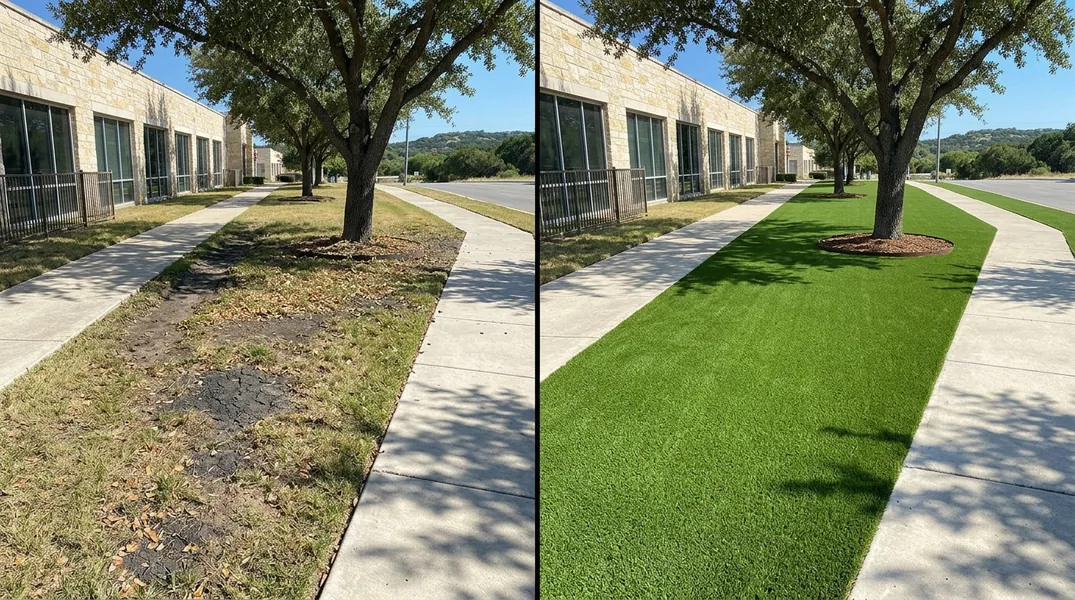
Why Base Preparation Matters for Artificial Grass in San Antonio
If you're considering Residential Artificial Grass Installation in San Antonio, you've probably heard that proper installation is everything. The truth is even more specific: what happens beneath the surface determines whether your investment lasts 10 years or falls apart in 5. The foundation of any artificial grass system is the base, and in San Antonio, that foundation faces unique challenges.
Our region sits on two very different soil types. The north and west areas feature the rocky limestone and caliche of the Hill Country, while the south side is dominated by dense clay soil. Both present drainage problems if not handled correctly. Water pooling, settling, and shifting are the enemies of artificial grass longevity. A properly prepared base prevents these issues and ensures your turf stays beautiful and functional for years to come. That's why understanding what to put under artificial grass is not just a technical detail, it's the cornerstone of a successful installation.
Understanding Hill Country Rock and Caliche Challenges
The Hill Country terrain that extends into northern San Antonio presents installers with a specific obstacle: caliche. This hard, calcium-carbonate layer sits just below the topsoil and can range from thin to several inches thick. Many homeowners discover caliche only when they try to dig, and it can feel like hitting concrete. The problem isn't the rock itself, but how it affects drainage. Caliche is essentially impermeable, which means water can't pass through it easily. If your base prep doesn't account for this, water will sit on top of your artificial grass system, creating puddles and eventually damaging the turf backing.
Professional turf base prep in this terrain requires breaking through or removing the caliche layer to allow proper water flow. At San Antonio Turf Installation, we assess each property's soil composition before recommending a strategy. Sometimes we remove the caliche entirely. Other times, we perforate it strategically to allow drainage while keeping the structural integrity of the base. The key is that artificial grass drainage must flow downward and away from the turf surface, not pool beneath it. This is especially important if you're planning Pet Turf & Dog Run Installation, where urine drainage is critical for maintaining a sanitary surface.
Managing South-Side Clay Soil and Compaction
South San Antonio's clay soil brings a different set of challenges. Clay is dense, holds moisture, and compacts easily, which is the opposite of what you want under artificial grass. When clay compacts, it becomes even less permeable, and water has nowhere to go. Over time, this creates a swamp-like condition beneath your turf. The artificial grass underlay may trap moisture, leading to mold, algae growth, and degradation of the backing material. Additionally, clay that shifts with moisture cycles can cause the base to settle unevenly, creating low spots where your turf buckles or develops hollow areas.
The solution involves removing or significantly amending the clay. Most professional installations in clay areas require excavation of 4 to 6 inches of the existing soil, which is then replaced with a engineered base material. This might include recycled asphalt, crushed limestone, or a combination of materials designed to compact uniformly and drain freely. The goal is to create a stable, well-draining foundation that won't shift with San Antonio's seasonal moisture changes. This extra step adds to the labor involved, but it's the difference between a turf system that lasts and one that fails prematurely.
Choosing the Right Artificial Grass Underlay and Base Materials
Once the problematic soil is addressed, the next critical decision is what to put under artificial grass in terms of underlay and base materials. The underlay is a geotextile fabric that sits directly beneath the turf, and it serves multiple purposes. It provides a smooth, even surface for the turf backing to rest on, it filters water while preventing soil from migrating upward, and it helps stabilize the base material below. Not all underlays are created equal, and choosing the right one depends on your specific soil conditions and intended use.
For most residential applications in San Antonio, we recommend a high-quality, permeable geotextile underlay rated for at least 200 pounds per linear inch of tensile strength. Below the underlay, the base material itself should be compacted to a density that provides stability without creating a hard pan that prevents drainage. A typical system includes 2 to 4 inches of compacted recycled asphalt or crushed limestone base, followed by the geotextile underlay, and then the artificial grass. The recycled asphalt compacts well, provides excellent drainage, and is cost-effective. Crushed limestone offers similar benefits with a slightly different aesthetic if any is visible at the edges. Some premium installations use specialized drainage boards designed specifically for artificial grass, which offer superior water management but at a higher cost.
The Installation Process: Getting Base Prep Right
Proper turf base prep isn't something you can rush. The installation process begins with a thorough site assessment and soil testing. Our team evaluates drainage patterns, identifies problem areas like caliche or clay, and determines the best approach for your specific yard. We then mark out the installation area and begin removal of existing grass, weeds, and problematic soil. Depending on your terrain, this might involve heavy equipment like mini excavators or simple hand tools for smaller areas.
After soil removal, we grade the area to ensure proper slope for drainage, typically aiming for a gentle slope away from structures. The base material is then spread and compacted in layers, with each layer compacted to the appropriate density. This is where precision matters. Under-compacting leaves the base unstable and prone to settling, while over-compacting can create a surface that doesn't drain properly. Once the base is ready, we install the geotextile underlay, ensuring it overlaps properly and is secured at the edges. Only then does the artificial grass itself get laid down and seamed. This methodical approach ensures your investment performs as intended.
Artificial Grass Drainage Solutions for San Antonio Yards
Artificial grass drainage is perhaps the most important technical consideration for San Antonio homeowners. Our climate features intense summer rains followed by dry periods, and your drainage system needs to handle both extremes. Proper drainage prevents standing water, eliminates odors, extends the life of the turf backing, and keeps the surface safe and clean. The drainage system actually starts before the grass is installed, with the base prep we've discussed, but it extends to how the perimeter of the installation is managed.
At the edges of your artificial grass installation, water needs a clear path to exit. This might involve creating a slight depression around the perimeter, installing French drains or perforated drainage lines, or directing water toward existing storm drains or landscaping features. For Pool Surround Turf installations, drainage is even more critical because of the volume of water from the pool area. We design systems that channel water away from the pool structure while keeping the turf dry and usable. The combination of a properly prepared base, quality underlay, and strategic perimeter drainage creates a complete system that handles whatever San Antonio's weather throws at it.
Getting Professional Base Prep Near Me: When to Call San Antonio Turf Installation
While some homeowners attempt DIY artificial grass installation, the base preparation phase is where professional expertise truly matters. The difference between a well-prepared base and a mediocre one isn't always visible to the untrained eye, but it becomes painfully obvious after a year of use. Improper base prep leads to warranty claims, repair costs, and frustration. That's why we recommend getting a free estimate from San Antonio Turf Installation before making any decisions about your project.
When you contact us at (830) 590-0771 or through our website, we'll schedule a site visit to assess your specific conditions. We'll identify caliche, clay, drainage challenges, and any other factors that affect your installation. Based on that assessment, we'll provide transparent pricing and a detailed plan for your project. Whether you need a simple residential installation or something more specialized like Putting Green Installation, we'll handle the base prep correctly so your turf lasts for years.
Looking for a professional artificial grass installation company in San Antonio? San Antonio Turf Installation responds fast for all your artificial grass installation needs.
Get a Free Quote