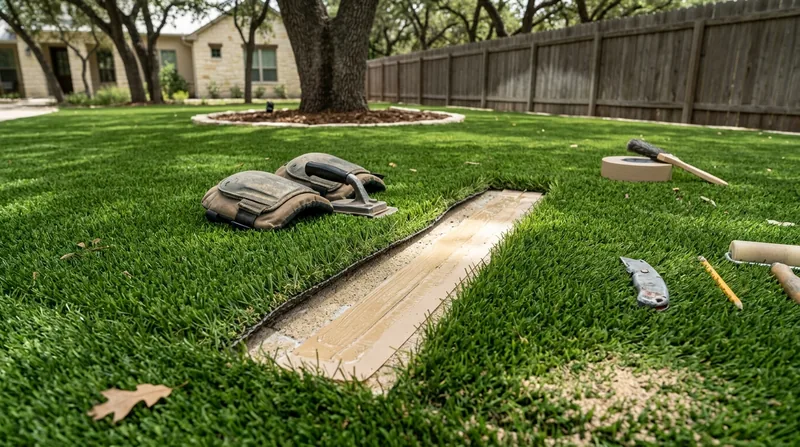




San Antonio's turf installations face real wear and tear from the intense summer heat, heavy spring thunderstorms, and the rocky limestone terrain that runs through neighborhoods from Alamo Heights to Universal City. When seams separate, edges lift, or high-traffic areas flatten, turf repair and seam repair work keeps your synthetic lawn looking uniform and functional for years longer. We handle seam separation, edge lifting, melt damage from window reflections, worn traffic lanes, and patching of damaged sections across residential yards, commercial properties, and specialty installations throughout the greater San Antonio area. A well-executed repair extends the life of your turf investment and restores the clean, finished appearance that makes the difference between a maintained yard and a neglected one. Since 2013, we have repaired turf installations across San Antonio's diverse neighborhoods, from the Hill Country stone homes in the north to the post-war brick ranches on the east side.
Why Turf Repair Matters in San Antonio's Heat and Weather
San Antonio's climate creates predictable failure modes in artificial turf. The summer sun reaches 100 degrees Fahrenheit regularly, and the hard UV exposure degrades seams and edge adhesives faster than in milder climates. Spring thunderstorms bring heavy runoff that can lift turf edges if base drainage was not properly installed, and the limestone-heavy soil in the northern neighborhoods (Alamo Heights, Olmos Park, Shavano Park) means uneven settling that stresses seams. High-traffic areas in pet yards and around pool surrounds wear down the pile and flatten traffic lanes. Window reflections from limestone and stucco homes can melt synthetic fibers in concentrated spots. Early repair prevents small problems from becoming expensive replacements.
- Seam separation happens when adhesive fails under UV exposure, heat cycling, or ground movement from San Antonio's limestone bedrock.
- Edge lifting occurs when water pools under turf edges during spring storms or when base prep was insufficient for the local drainage patterns.
- Worn traffic lanes flatten the pile in pet runs and high-use zones, making the turf look matted and thin compared to the rest of the yard.
- Melt damage from window or solar reflections creates concentrated damage that looks worse than it is and spreads if not repaired quickly.
- Patching fills holes, torn seams, or damaged sections without removing the entire installation.
Catching these issues early keeps your turf looking sharp and prevents the damage from spreading to surrounding areas.
Key info: San Antonio's intense summer heat and spring thunderstorms are the two biggest drivers of turf damage. Heat breaks down seam adhesives, and heavy rain stresses edges if the base was not compacted correctly. We inspect the damage and recommend repair versus replacement based on what will hold up longest in your specific yard and neighborhood.
How We Repair and Reseal Turf in San Antonio
Our repair process starts with a detailed inspection to identify the root cause of the damage. A seam that separates because the adhesive failed needs a different fix than a seam that lifted because water pooled underneath. We identify whether the problem is surface-level (adhesive breakdown) or structural (base settling or drainage failure), and we address the cause first so the repair does not fail again. For seams, we clean the edges, remove old adhesive, and re-glue with a heat-resistant product rated for San Antonio's temperature swings. For lifted edges, we check drainage, recompact the base if needed, and reset the turf with new adhesive and fasteners.
- We inspect the damage on site to determine whether it is a seam separation, edge lift, wear spot, melt damage, or structural problem under the turf.
- We clean and prepare the damaged area by removing old adhesive, debris, and any loose fibers that would prevent a clean bond.
- We apply heat-resistant seam adhesive or edge fasteners depending on the repair type and the local climate stress at that location.
- We test the repair by walking the seam, checking adhesion, and confirming that the edge is secure and flush with the surrounding turf.
- We document the work in writing so you know what was repaired, what product was used, and what to watch for going forward.
This methodical approach means your repair holds up through San Antonio's summer heat and spring storms instead of failing again in a few months.
Example: A homeowner in Terrell Hills noticed a seam separating along the edge of her backyard turf where it met the patio. We identified that the base had settled unevenly because the limestone underneath was not fully compacted. We re-leveled the base, added compacted stone, and re-glued the seam with a product rated for the local heat. Six months later, the seam is still solid.
Repair Methods and When to Use Each
| Repair Type | Description | Best For |
|---|---|---|
| Seam Re-gluing | Remove old adhesive, clean edges, apply new heat-resistant seam tape or liquid adhesive, and cure per manufacturer specs. | Separated seams caused by UV breakdown or thermal cycling, common in San Antonio's high-heat climate. |
| Edge Fastening | Reset lifted edges with stainless steel fasteners (nails or screws) driven through the edge into the base, securing turf to perimeter. | Lifted or peeling edges around patios, driveways, and pool surrounds where water pooled or base settled. |
| Patch and Seam | Cut out damaged section, fit a matching patch, seam the edges with adhesive and fasteners, and blend the pile direction. | Holes, tears, melt spots, or worn traffic lanes that cannot be repaired in place and need a new piece of turf. |
| Base Repair | Lift turf section, recompact or re-level the base, address drainage or settling, then reset the turf with new adhesive. | Structural problems like uneven settling, water pooling, or soft spots that cause repeated seam or edge failures. |
| Pile Grooming | Brush and rake the turf to restore pile direction, remove matting, and refresh the appearance of flattened areas. | Worn traffic lanes and high-use zones in pet yards where the pile is matted but the turf itself is not damaged. |
Each repair type addresses a specific failure mode. We diagnose which method your turf needs and explain why before we start work.
Turf Repair and Seam Repair Cost in San Antonio: What to Expect
Repair costs in San Antonio range from around $350 for a single seam repair to several thousand dollars for large patching or base repair work. The price depends on the size of the damaged area, whether the base needs rework, how many seams need re-gluing, and whether we need to source a matching turf patch. A small seam separation on a residential yard typically runs between $350 and $600. A patched area the size of a patio table might be $800 to $1,200. A full base repair under a lifted section can run $1,500 to $3,000 or more depending on the size and complexity. We measure the damage on site and provide a written estimate before we start, so you know the cost before the work begins.
Several factors move the price up or down. A seam that runs 20 feet costs more than a 5-foot seam. If the base under a lifted edge is soft or uneven, we need to excavate, recompact, and re-level before we can reset the turf, which takes time and materials. If we need to patch a section and the original turf is no longer available, we source a close match, which may require a minimum order. High-traffic pet yards sometimes need multiple repairs or a full section replacement because the damage is spread across a larger area. We always explain what is driving the estimate so you understand where your money is going.
Head to our pricing page for a detailed breakdown of common repair scenarios and what they typically cost in the San Antonio area. For a free, no-obligation estimate on your specific damage, call (830) 590-0771 or fill out our contact form, and we will respond within 24 hours.
What to Look for When Hiring a Turf Repair Company Near San Antonio
Not every turf installation company is equipped to handle repair work properly. A crew that installed your turf may not have the skills to diagnose why a seam failed or how to fix a base problem without tearing out the whole yard. When you are looking for a turf repair company near San Antonio, ask the right questions to make sure you are hiring someone who will fix the problem, not just patch it temporarily.
- Request a certificate of insurance naming general liability and workers compensation before any work starts, and verify the coverage is active.
- Get a written estimate that names the repair method, the materials to be used, the area being repaired, and the total cost before you commit.
- Ask for references from recent repair jobs in San Antonio, and call at least two to ask whether the repair held up and whether the crew was professional.
- Check that the crew understands the root cause of the damage, not just the surface symptom, so the repair does not fail again in a few months.
- Confirm that the company will document the repair in writing, including what was done, what product was used, and any warranty on the workmanship.
- Verify that the crew respects your property, protects landscaping and structures, and cleans up debris before they leave.
If you have questions about whether your turf needs repair or replacement, or if you want a second opinion on an estimate you received, contact us for a free inspection. We have been doing this work since 2013, and we are happy to walk you through what we see and what we recommend.
Turf Repair & Seam Repair in San Antonio: Pricing Guide
| Service | Price | Details |
|---|---|---|
| Single seam repair | Starting at $350 | Small seam separation, cleaned and re-glued, typical residential yard seam under 10 feet |
| Edge reset or fastening | Starting at $400 | Lifted edge along patio or driveway, reset with fasteners and adhesive, up to 15 linear feet |
| Patch and seam | Starting at $800 | Damaged section cut out and replaced with matching turf, includes seaming and pile blending, typically 50 to 100 square feet |
| Base repair or re-leveling | Starting at $1,500 | Turf lifted, base recompacted or re-leveled, drainage addressed, turf reset, cost depends on area size and settling severity |
| Estimate | Free | On-site damage inspection and written estimate, response within 24 hours at (830) 590-0771, no obligation to book |
Indicative pricing, the exact cost depends on square footage, finish, and site access. Free personalized estimate within 24h at (830) 590-0771.


